


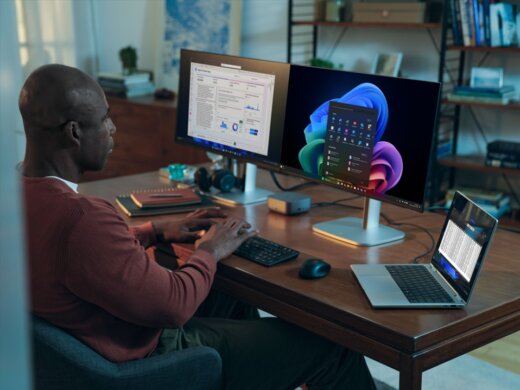
AI is already pervasive in the workplace. According to a global study by the University of Melbourne, 58% of employees now use AI at work. A third use it weekly or even daily. Some roles are embracing the technology faster than others. Those findings were recently echoed in HP’s 2025 Work Relationship Index, with 42% of those with a healthy work relationship reporting they use AI tools on a daily basis.
This trend is likely going to continue. For one, users see the upside of the technology. Respondents to a study from Microsoft cited a raft of benefits for employees using AI, including time savings (90%), being able to focus on their most important work (85%) and improved creativity (84%).
A second adoption driver is the increasing availability of AI PCs. Gartner predicts that AI PCs will become the norm for enterprises by 2029 with adoption accelerating rapidly over the next three years. Ranjit Atwal, Senior Director Analyst at Gartner, explained: “Users will invest in AI PCs to ensure they are prepared for the growing integration of AI at the edge.”
More data, more risk
However, as the adoption and use of AI PCs increases, so too does the cybersecurity risk. Whereas traditional PCs act mainly as thin clients that provide access to cloud-based AI services, AI PCs can process and store data on the device to reduce latency and enable offline working. As a result, a lost or stolen AI PC could present a higher potential impact if the device is not properly secured.
The rise of hybrid working makes such an eventuality more likely. As Boris Balacheff, Chief Technologist for Security Research and Head of the HP Security Lab put it: “Hybrid work is accelerating the commoditisation of attacks enabled by physical access to devices. This is because devices are more exposed as employees are more mobile and distributed, and the tools needed for device tampering become increasingly accessible and affordable.”
Protecting lost and missing devices
So how, exactly, can organisations safeguard data and users from threats as AI PCs take centre stage? One approach is to install IT admin controls at the OS level that enable IT teams to locate missing PCs in real time, temporarily lock missing PCs and erase PC data on unrecoverable devices.
However, virtually all such systems require that the end device be powered up, operational and connected to the internet. This requirement can stand in the way of IT teams tracking devices and protecting the data stored on them.
Fortunately, newer solutions such as HP Protect and Trace with Wolf Connect use global cellular and GPS technology to find, lock and erase PCs, even if the PC is turned off. HP devices also incorporate an endpoint security controller chip, allowing its protect and trace solution to operate independently of the operating system’s boot status.
AI PCs are the future for enterprise IT and will unlock unprecedented productivity benefits. Deploying these devices safely, however, requires device-level controls that operate below the operating system and enable IT teams to remotely connect to and wipe devices no matter what their status. With these controls in place, enterprises will be able to move forward with AI PC adoption and hybrid working models with greater confidence that their devices will not be compromised if lost or stolen.
For more information on how to empower your workforce with AI-powered PCs and enterprise-grade cybersecurity, click here.