



Despite resistance and return to office mandates, hybrid work is here to stay. Gallup reports that 51% of US workers in a position to work remotely have a hybrid arrangement in place, while a further 28% work fully remotely. Meanwhile, online meetings and collaboration have become the norm for many organisations, eliminating unnecessary travel while reducing costs.
It’s now critical that every business has the right technology and the right environments to support effective communication and collaboration. This doesn’t just mean investing in physical conference room technology and spaces, which HP research has found host just 1% of digital meetings, but investing in the hardware and environments where workers conduct the remaining 99%. Whether they’re at a permanent desk, a hotdesk, an in-house meeting hub or the home, employees need to feel they can connect, contribute and share. It’s noteworthy that a 2024 study for Vyopta (now part of HP) found that “in 20% of all meetings, at least one person is likely to experience an issue that harms their ability to communicate and collaborate.”
Meeting rooms and conference rooms are important, providing a space where hybrid teams can work together and where key decisions and agreements can be made. Large format screens and either modular room systems or all-in-one video bars are essential for covering every seat in the room, often using AI features to focus on and prioritise speakers. Compact video bars, stand-alone cameras and simple USB solutions can also convert smaller spaces for effective collaboration. Staying within one ecosystem, preferably with accessible, intuitive controls removes friction and confusion when setting up and managing a meeting, while also making sense from a support point of view.
Creating the right workspace
It’s also worth considering practical measures. Balanced lighting is just as important for video quality as the performance of the camera hardware. Soft furnishings and sound-absorbing panels reduce unwanted reverb and make it easier to record clean audio.
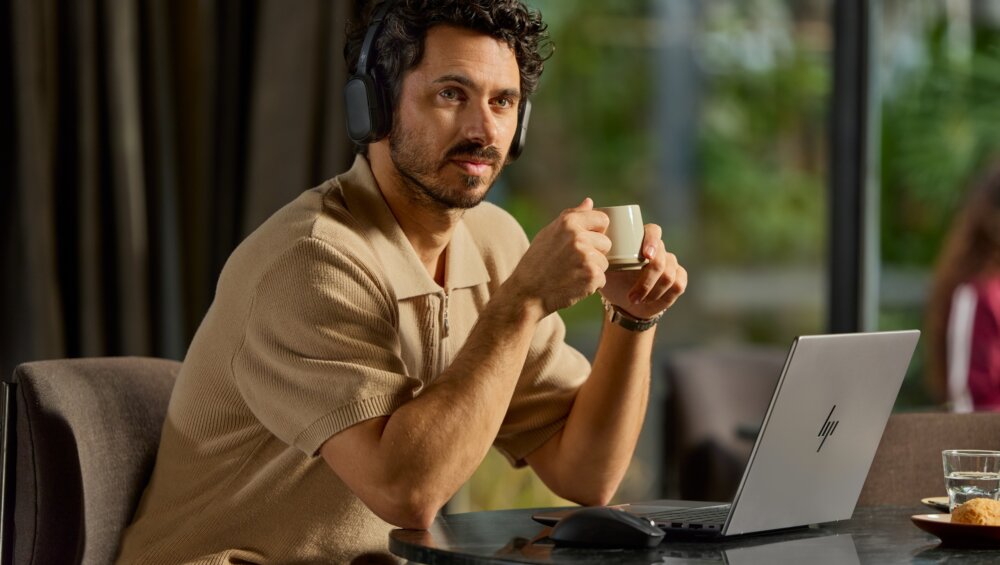
Individual workers — both office-based and hybrid — deserve the same attention. Providing comfortable headsets with accurate, noise-cancelling microphones ensures they can take part fully in the conversation. What’s more, specialist manufacturers like Poly make them in a range of different form factors and connectivity options, so that each worker has a headset to match their device, work environment and working style. Headsets certified for specific collaboration apps ensure they’ll work reliably and not cause issues, while accessible controls to mute the microphone or features that remove background noise can help create a fluid, focused meeting experience, which technology enhances rather than disrupts.
Again, using devices from a single vendor and ecosystem can help foster a sense of connection, and make it easier to switch from the home to the office and back again. Workers are already familiar with aspects of the hardware and related tools. Business-grade solutions can also support closer monitoring, allowing IT teams to track meeting quality and hardware and software utilisation and use that data—with employee feedback — to root out problems and resolve them. Too often, getting virtual meetings up and running can feel like a dark art. A coherent ecosystem makes it a science. Solutions that integrate communications and telemetry into a digital experience platform are particularly useful here.
Poly provides a full range of solutions covering both meeting and conference rooms and the needs of individual workers. We’re past the point where online meetings and collaboration tools need to work on just a basic level; they’re key to how work gets done. HP and Poly remove the friction from the process, ensuring the best possible experience for everyone.
To find out, click here.